A History of Western Philosophy Book 4
DESCRIPTION
DESCRIPTION
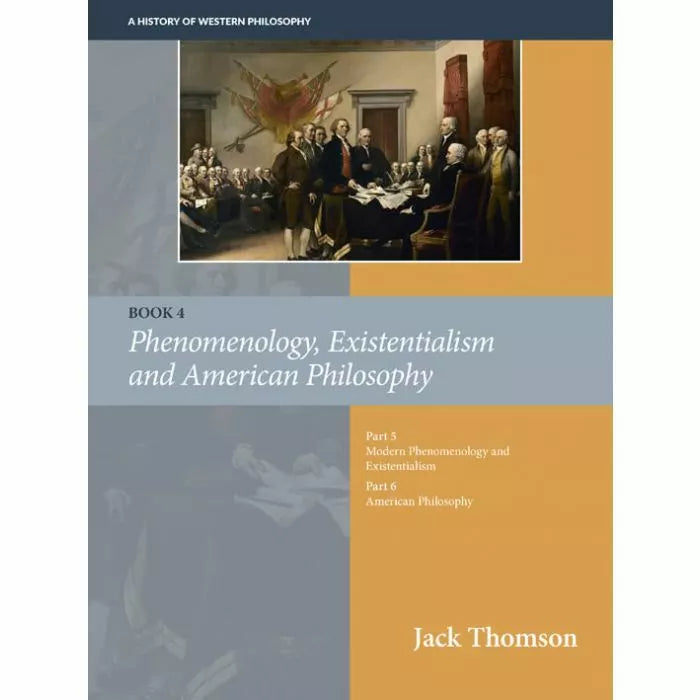
Book 4: Phenomenology, Existentialism and American Philosophy
Part 5: Modern Phenomenology and Existentialism: The new philosophies of phenomenology and existentialism rejected Romanticism and Hegel’s metaphysics. Existentialists assert that the only certain knowledge that we have about our lives is that we exist and that we are going to die. As there is no god for us to rely on, we have to create our own values for ourselves and take responsibility for the actions we take in living according to them. Phenomenology’s founder, Edmund Husserl, devised a method of accessing and understanding what he believed to be the reliable intuitive knowledge we have of the essence of phenomena – objects and feelings. Martin Heidegger’s theory of the nature of human being developed out of Phenomenology and led to the work of the later existentialists, Jean-Paul Sartre, Albert Camus and Maurice Merleau-Ponty.
Part 6: American Philosophy: American philosophy examines the origins and major currents of American thought, with the emphasis on recurring themes and the philosophy of pragmatism which culminates in the liberal humanism of John Dewey. We also closely examine the brilliant contribution of Susanne Langer to the philosophy of art and Richard Rorty’s highly individualistic neo-pragmatism which rejects the idea of absolute truth.
BOOK DETAILS
BOOK DETAILS
ADDITIONAL INFORMATION
ISBN 9781925169188
Author: Jack Thomson,
Publisher: Phoenix
Share
